Access GCA
If you’ve spent any time researching how to become a gunsmith, you’ve probably run into the same piece of “advice” over and over on forums, Reddit threads, and YouTube comment sections: you can’t really learn gunsmithing unless you pack up, move to a campus, and sit in a classroom for two years.
It sounds like common sense. It’s also outdated.
That belief made sense decades ago, when campus programs were one of the only structured ways to learn the trade in any organized fashion. If you wanted real instruction instead of trial and error in your garage, a classroom with a bench, some tools, and an experienced instructor was genuinely your best option. For a long time, there wasn’t a serious alternative.
But the way gunsmithing is taught — and the way people actually learn it — has changed since then. Video-based, self-paced online training didn’t just catch up to the campus model. In a lot of practical ways, it passed it. The lie isn’t that campus schools are worthless. The lie is that they’re the only legitimate path, and that anything learned outside a physical classroom is somehow lesser. That’s the part that hasn’t been true for years, yet it’s still repeated constantly online by people who’ve never actually compared the two paths side by side.
This isn’t a theoretical argument, either. It’s a debate American Gunsmithing Institute (AGI) founder Gene Kelly can speak to directly, because he came up through a campus program himself — and he’s spent more than three decades since building something different on purpose.
This is Internet Gunsmithing Lie #1: “You can’t learn real gunsmithing unless you go to a hands-on, campus-based school.” It’s the first of seven lies the internet keeps repeating about this trade, and it’s worth taking apart in detail, because it’s the one that stops the most people before they ever get started.
The Man Behind the Question Went to a Campus-Based School
Gene Kelly is a licensed Class 2 Manufacturer, a working gunsmith of more than 40 years, and the president of the American Gunsmithing Institute. Before any of that, he was a student at Lassen College, one of the well-known campus-based gunsmithing schools of its era.
What made that program valuable wasn’t the campus itself. It was who was teaching there: Master Gunsmith Bob Dunlap, senior instructor at Lassen, who taught his students to understand firearms Design, Function, and Repair — not just how to swap a part, but why the part matters and how it interacts with everything else in the gun.
That distinction is the whole story. Gene didn’t learn to be a gunsmith because he sat in a classroom. He learned because he had access to a specific body of knowledge — Bob Dunlap’s Design, Function, & Repair (D, F, & R) system — that happened to be taught on a campus at the time. The campus was the delivery method. D, F, & R was the actual education.
Think about it this way: if you wanted to learn a specific surgical technique from a specific surgeon, would the value come from the hospital’s building, or from that surgeon’s knowledge and your ability to actually absorb it? Nobody would argue the building matters. Gunsmithing works the same way. The building — the campus — was never the ingredient that made Gene a gunsmith. Bob Dunlap’s system was.
Once you separate those two things, the “you need a campus” argument starts to fall apart. What people are actually asking for when they say they want “hands-on, campus-based training” is access to a real expert who can show them, step by step, exactly how a firearm’s systems work internally. They’re not actually asking for a physical building in a specific town. They just haven’t considered that the two things can be separated — until they see it done.
What Campus-Based Gunsmithing Programs Actually Involve
To be fair to the campus model, it’s worth looking at what it realistically requires, using one of the most established programs as a reference point.
Trinidad State College in Colorado runs one of the oldest gunsmithing programs in the country, dating back to 1947. Its Associate of Applied Science gunsmithing degree is structured as a two-year, in-person program, with coursework in bench metal, machining, gun repair, and stockmaking. It’s a legitimate, well-regarded program — but it illustrates exactly what “campus-based” actually asks of a student: two years of full-time attendance, relocation to a specific town, program fees, and separate costs for room, board, and tools on top of tuition.
That’s the tradeoff baked into the campus model itself, regardless of which specific school you’re comparing. You’re not just paying for instruction. You’re paying with two years of your life, often in a location far from your home, your job, and your family. If you’re already working, that likely means quitting your job or taking a leave of absence for two years — which is its own hidden cost that rarely shows up on a tuition sheet, but is just as real as the fees themselves. And once you graduate, that access to instructors, cutaway firearms, and shop equipment typically ends. You’re on your own from that point forward, working from whatever notes and memory you managed to hold onto.
None of that makes campus training bad, and it doesn’t mean programs like Trinidad State’s aren’t legitimate or worthwhile for the right student. It makes the campus model slow, geographically limiting, and expensive relative to what you’re actually there to learn: a teaching method, not a building. If the goal is simply to learn basic gunsmithing and build a rifle or refinish a stock, relocating for two years is one way to get there — but it’s no longer the only way, and for most people juggling a job, a family, or a mortgage, it isn’t the most realistic one either.
The Real Bottleneck: Group-Paced Learning
Here’s the part that rarely gets talked about. In any classroom-based program, you move at the speed of the group, not the speed you’re capable of.
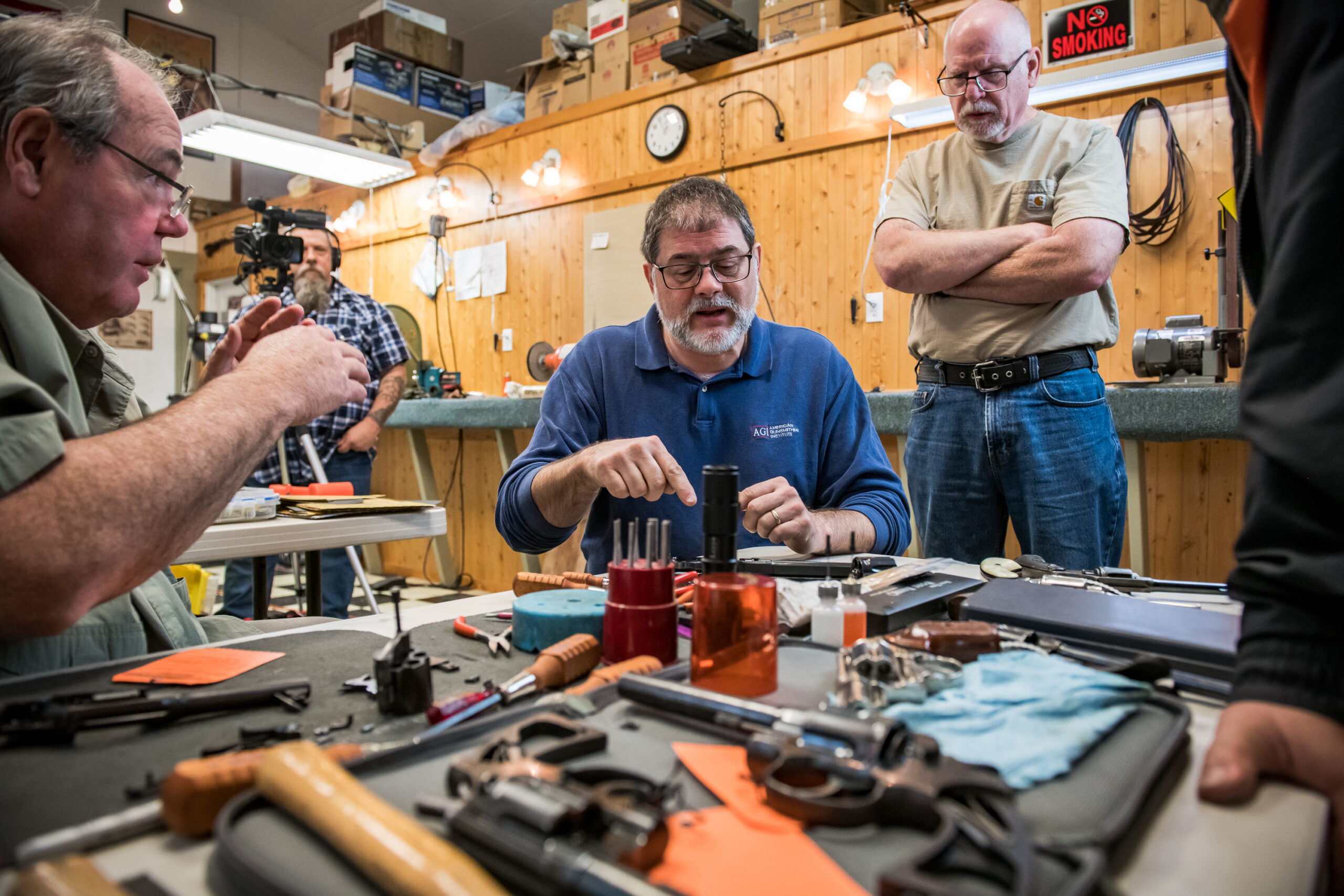
There’s a fixed number of instructors, a fixed number of guns to work on which you often have to bring and provide yourself, and a fixed number of hours in the semester. If four other students are ahead of you on a topic, you wait. If you’re ahead of them, you wait anyway, because the class moves together. Hands-on time with an instructor gets divided across everyone in the room, which means the actual one-on-one guidance — the part that’s supposed to be the advantage of being “in person” — often ends up being minutes per student, not hours.
That’s not a knock on any individual instructor. It’s just math. A classroom can only give you as much individual attention as its student-to-instructor ratio allows, and no instructor, however skilled, can be in five places on a bench at once or repeat a demonstration privately for every student who needed to see it twice.
There’s also a subtler cost to group-paced learning that doesn’t get talked about enough: the pressure to keep up. Nobody wants to be the student who’s still asking questions about a step everyone else has already moved past. That pressure pushes people to nod along and move forward before they’ve actually absorbed the material, which is exactly how someone graduates a program without truly understanding Design, Function, and Repair — they understood enough to keep pace, not necessarily enough to diagnose an unfamiliar firearm on their own a year later.
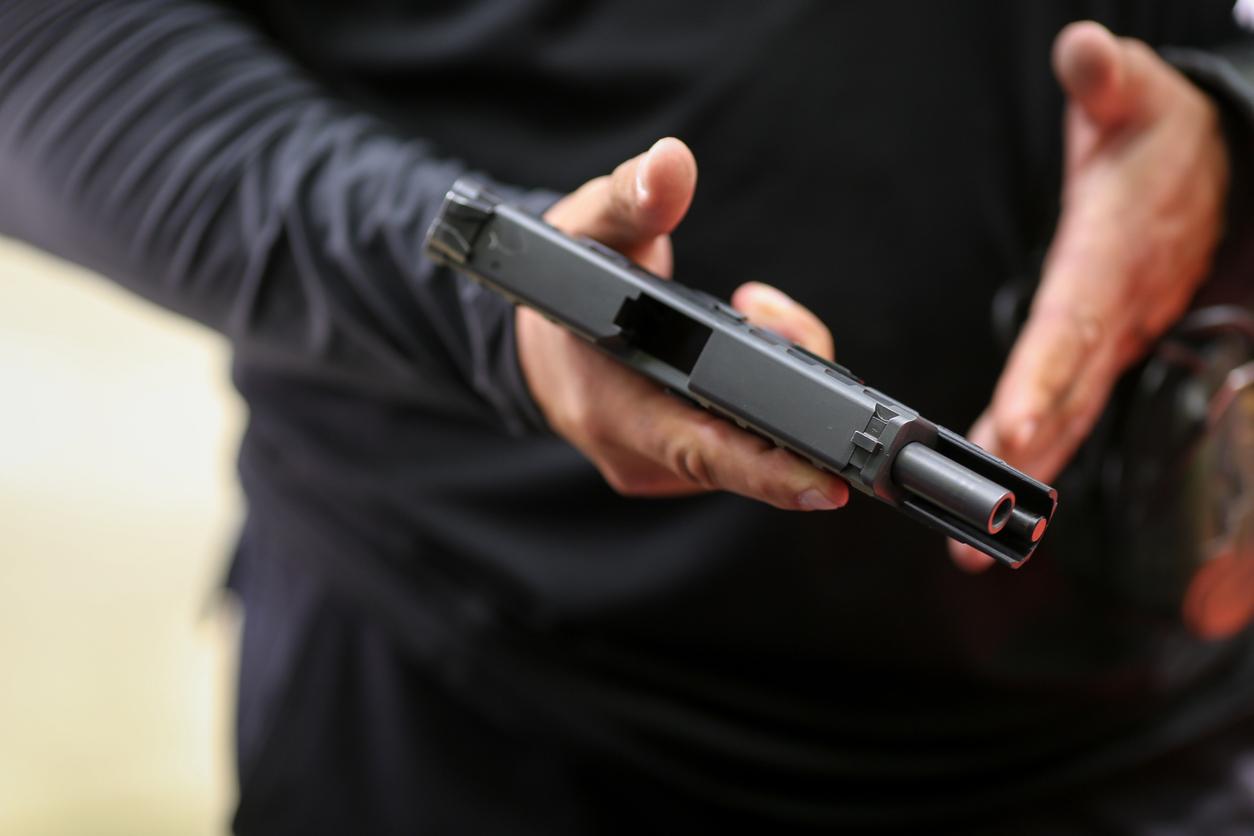
Compare that to how AGI’s video-based training works: every lesson is filmed close-up, using cutaway firearms so you can actually see how the internal systems interact — sears, hammers, locking systems, gas systems — the parts you’d never get to see clearly from a seat in a classroom, even the front row. You can pause it, rewind it, and rewatch a step as many times as you need, with nobody watching the clock and nobody waiting on you to catch up. You’re never rushed because someone else in the group already “gets it,” and you’re never left behind because you needed a few extra passes on a difficult concept. The material waits for you — not the other way around.
Why “Parts Swapping” Isn’t the Same as Gunsmithing
This is the piece that actually matters most for anyone figuring out how to become a gunsmith, and it has nothing to do with campus versus online. It has to do with what’s being taught.
A lot of gunsmithing instruction — campus-based or otherwise — focuses on specific repair jobs: mount this scope, refinish this stock, install this recoil pad. That’s useful information, but it only prepares you for the exact jobs you were shown. The moment a customer brings in a firearm that doesn’t match the model you practiced on, you’re stuck improvising.
AGI’s founder learned something different at Lassen College under Bob Dunlap: Design, Function, and Repair. It’s a systems-based approach to understanding how firearms work — not memorizing steps for specific models, but learning the underlying mechanical logic so you can diagnose and repair virtually any firearm that comes across your bench, including ones you’ve never seen before.
That’s the difference between being a gunsmith and being what’s sometimes called a “parts swapper” — someone trying different fixes and hoping one works, without actually understanding why the gun failed in the first place. A parts swapper might get lucky on a common repair they’ve done before. Hand them something unfamiliar — an older design, an imported model, a firearm with a system they’ve never encountered — and they’re guessing. A gunsmith who actually understands D, F, & R isn’t guessing. They’re diagnosing, the same way a mechanic who understands how an engine works can troubleshoot a car they’ve never opened before, because they understand the underlying system, not just a memorized checklist for one specific model.
That gap matters enormously once you’re actually running a gunsmithing business. Customers don’t walk in carrying the exact make and model you happened to practice on in a training program. With thousands of different firearm models in circulation across generations of manufacturing, real-world work means constant variation — and a repair method built entirely around specific memorized projects breaks down the moment something doesn’t match the script.
Bob Dunlap has since passed away, and his exact system is no longer taught at Lassen College. But AGI spent over 20 years documenting his complete D, F, & R methodology on video before he passed — which means today’s students learn directly from the source, the same way Gene did, just without needing to attend a physical classroom to get it. It’s a rare thing in any trade: the ability to learn from a master craftsman’s original teaching, preserved in detail, long after that person is no longer able to teach in person.
So What Does “Learning From Home” Actually Look Like?
If the idea of learning a hands-on trade without hands-on classroom time still sounds abstract, here’s what it looks like in practice with AGI’s online gunsmithing courses:
- Video instruction with cutaway firearms. You see the internal mechanics up close, not from across a workbench.
- Self-paced study. You’re not waiting on classmates or rationed equipment. You move at your own speed, and you can revisit any lesson later — even years after finishing your training, which isn’t something a campus program offers once you’ve graduated.
- A system-based curriculum, not just a checklist of projects. You learn how firearm systems work across handguns, shotguns, rimfires, and centerfire rifles, so you’re prepared for variation instead of just the specific models you happened to practice on.
- Instructor access through a working community. Rather than getting a few minutes of instructor time divided across a classroom, you have ongoing access to a network of AGI-trained gunsmiths and instructors through the Gunsmithing Club of America — long after your training is technically “done.”
Getting Started: What the Process Actually Looks Like
If you’re weighing how to become a gunsmith through an online gunsmith course instead of a campus program, the practical steps look like this:
- Get a clear picture of the training itself. Watch how the instruction is actually delivered before committing — AGI offers a free introductory video lesson so you can see the D, F, & R teaching method firsthand.
- Pick a course level that matches your goal. Whether you want to work on your own firearms as a hobbyist or build a full professional practice, course levels range from focused introductory training up through the Advanced Master program.
- Study at your own pace, from home. No relocating, no waiting on a semester schedule — you set the timeline.
- Build real experience while you train. Many students start offering professional gun cleaning or basic services early on, which builds hands-on repetition and income while the rest of the curriculum is still underway.
- Keep access to your training long-term. Because it’s video-based, you’re not locked out the moment you finish — you can go back and review specific repairs whenever a job calls for it.
None of that requires a campus, a relocation, or a two-year commitment before you see any return on the time you’ve invested. It’s a fundamentally different shape of learning curve — instead of two years of tuition and living expenses before you touch a paying job, you can be building real, income-generating skills within the first few months, while continuing to work through the rest of the curriculum in the background.
Common Questions About Learning Gunsmithing Online
Can you really become a professional gunsmith without ever setting foot in a classroom?
Yes — what makes someone a professional gunsmith isn’t the room they studied in, it’s whether they actually understand how firearms are designed to function and how to repair them when something breaks down. That understanding comes from the quality and depth of the instruction, not its physical location. Video-based training from an actual Master Gunsmith, using cutaway firearms to show internal mechanics up close, can teach that understanding just as effectively as a lecture hall — arguably more effectively, since you control the pace and can revisit anything you didn’t fully grasp the first time.
Is online gunsmith training taken seriously by gun shops and customers?
What matters to a gun shop owner or a customer bringing in a firearm for repair is whether the work gets done correctly, not which classroom the gunsmith sat in years earlier. Certification and demonstrated skill are what build a reputation in this trade — and reputation, once established, travels by word of mouth far more than by asking where someone went to school.
What’s the biggest misconception people have about campus-based gunsmithing schools?
The biggest misconception is that “hands-on” only means physically standing in a room with an instructor. In reality, the most valuable kind of hands-on learning is being able to see a repair up close, understand exactly why each step matters, and then go practice it yourself — repeatedly, at your own pace, until it’s second nature. Video instruction with cutaway firearms often provides a clearer, closer view of what’s actually happening inside a firearm than a student would get standing several feet back in a shared classroom.
Do you still need real, physical practice to become a gunsmith, even with online training?
Absolutely — no video course replaces picking up tools and actually working on firearms. The difference is when and how you get that practice. With online training, you’re not confined to a handful of “class project” firearms provided by a school. You can begin practicing immediately on your own equipment, or take on early paid work like professional gun cleaning, and build real repetitions from day one instead of waiting for scheduled shop time to become available.
The Bottom Line
The idea that you can’t become a real gunsmith without a hands-on campus program isn’t really about hands-on learning at all — it’s about who’s teaching you, what system they’re teaching, and whether you can actually see and revisit the material closely enough to understand it. A classroom doesn’t guarantee any of that. Close-up video instruction from a Master Gunsmith, built around a proven Design, Function, and Repair system, can deliver all of it — without asking you to put your life on hold for two years to get it.
Gene Kelly didn’t become a gunsmith because he went to a campus. He became one because he learned D, F, & R from Bob Dunlap. That knowledge is what AGI has spent over 30 years teaching people from home — and it’s exactly what’s still being taught today.
If you’re trying to figure out how to become a gunsmith and you’ve been holding back because you assumed a two-year, in-person program was your only real option, it’s worth taking a closer look at what online training actually delivers before ruling it out. The question was never really “campus or no campus.” It was always “who’s teaching you, and how closely can you actually see what they’re doing.” Once you answer that question honestly, the rest of the decision tends to take care of itself.
Ready to see the D, F, & R method for yourself? Request AGI’s free Info Kit and introductory video lesson or compare AGI’s course levels to find the right starting point for your goals.
You can also read more about AGI’s teaching philosophy or see what AGI graduates have gone on to build after training entirely from home.